
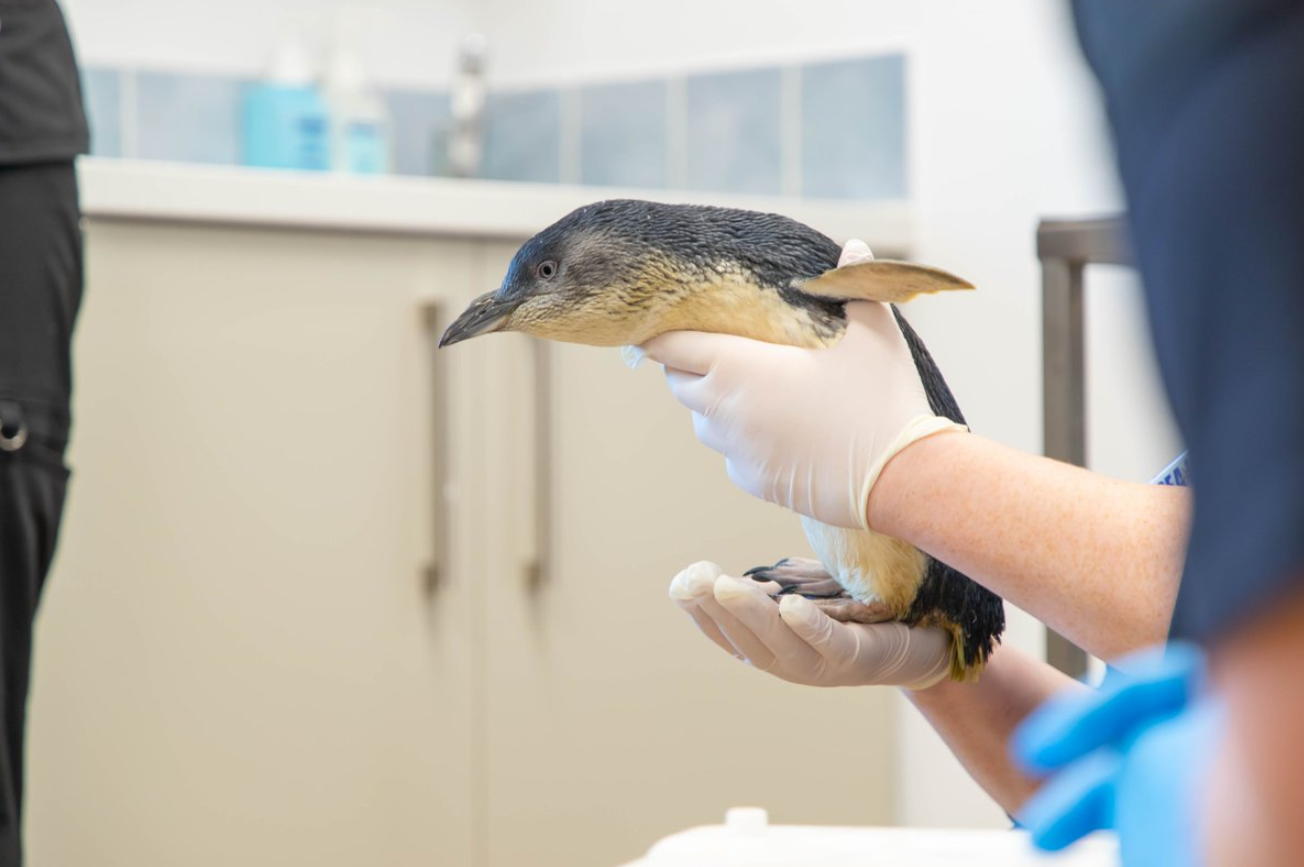
In a stunning scientific first, Neuralink has announced that a little blue penguin named "Joop" has become the first bird in history to successfully receive a brain-computer interface (BCI) implant. The procedure, carried out earlier today at Neuralink's advanced research facility in Fremont, California, marks a monumental leap forward in neuroscience — extending brain-chip technology beyond mammals for the very first time.
Elon Musk confirmed the news on X (formerly Twitter), posting a photo of Joop and writing: "Meet Joop. He's not just any penguin — he's the first bird with a Neuralink chip. The avian brain is incredibly complex and this opens up entirely new frontiers in understanding how birds navigate, communicate, and perceive the world. Today is a historic day for neuroscience."
About Joop
Joop is a two-year-old little blue penguin (Eudyptula minor), the smallest species of penguin in the world, standing just 25 centimeters tall. Originally from a wildlife rehabilitation center in New Zealand, Joop was selected for the program due to his calm temperament and robust health. Little blue penguins are known for their remarkable navigational abilities — they can travel hundreds of kilometers through open ocean and return to the exact same burrow. Understanding the neural basis of this ability is one of the key goals of the Neuralink avian research program.
Why a Penguin? The Science Behind the Choice
Dr. Matthew MacDougall, Neuralink's chief neuroscientist, explained why the team chose a penguin for this landmark experiment. "Avian brains are fundamentally different from mammalian brains. They're smaller, yet incredibly efficient — birds can perform complex cognitive tasks like tool use, problem-solving, and long-distance navigation with a brain that weighs just a few grams. If we can decode neural signals in a bird brain, it will revolutionize our understanding of neural computation itself."
The team specifically chose little blue penguins because their brain structure shares unique characteristics with both aquatic and terrestrial navigation systems. "Penguins are exceptional," MacDougall added. "They navigate underwater in near-total darkness, they have extraordinary spatial memory, and they display complex social behaviors. Joop gives us a window into a type of intelligence we've never been able to study at the neural level before."
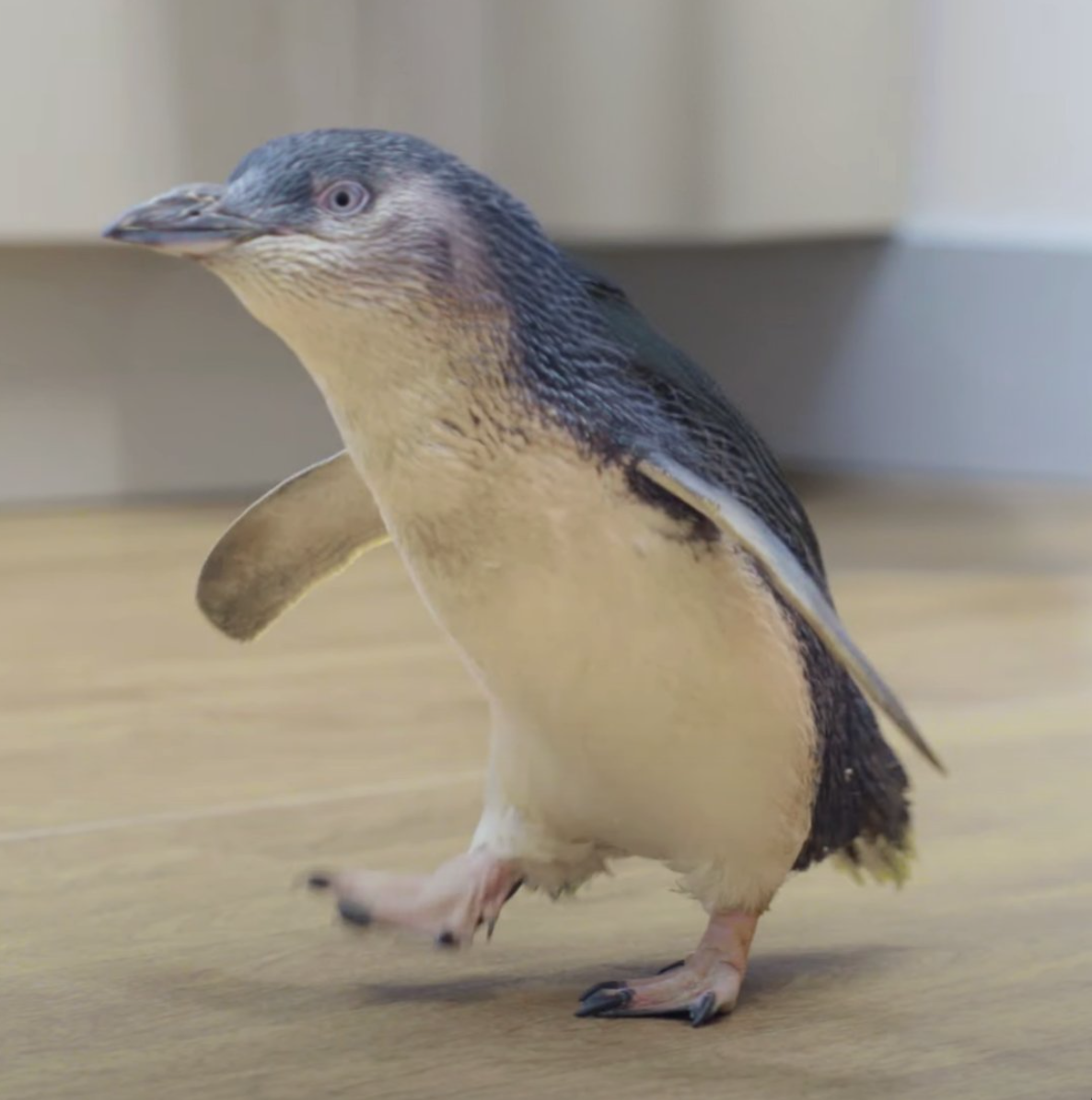
Joop walking confidently just hours after the implant procedure. The Neuralink team confirmed the penguin showed no signs of distress and was behaving normally, including his characteristic waddle. (Photo: Neuralink)
The Technology: Adapting BCI for Avian Brains
Technical Specifications: N2-Avian Chip
- Custom N2-Avian chip — 60% smaller than the standard N1, weighing just 0.8 grams
- 512 ultra-fine electrodes designed for avian neural density
- Sub-10ms decoding latency — faster than the mammalian N1 chip
- Waterproof to 50 meters — essential for a penguin's diving lifestyle
- Battery life of 14 days with wireless inductive charging
- Real-time telemetry during swimming and diving activities
The implant procedure on Joop required a completely redesigned chip. The standard Neuralink N1 used in primate studies was far too large for a penguin's compact skull. Neuralink's engineering team spent over 18 months developing the N2-Avian — a chip 60% smaller than the N1, weighing just 0.8 grams, with 512 electrodes specially calibrated for the higher neural density found in bird brains. Crucially, the entire device is waterproof to a depth of 50 meters, allowing Joop to swim and dive as he normally would.
Early data from Joop's implant is already yielding extraordinary results. Within just the first few hours, the chip recorded never-before-seen neural patterns associated with the penguin's spatial awareness and underwater echolocation-like navigation. "We're seeing neural firing patterns that don't exist in any mammalian brain we've studied," said MacDougall. "This could rewrite textbooks on how brains process spatial information."
Key Takeaways
- Joop, a little blue penguin, became the first bird ever to receive a Neuralink brain-computer interface implant on March 30, 2026.
- Neuralink developed a custom N2-Avian chip — 60% smaller than the N1, waterproof to 50m, with 512 electrodes.
- Early data has revealed never-before-seen neural patterns related to penguin navigation and spatial awareness.
- The experiment extends brain-computer interface technology beyond mammals for the first time in history.
- Joop is in excellent health and was walking and swimming normally within hours of the procedure.